
Facial feminization surgery (FFS) represents a transformative set of gender-affirming surgical procedures designed to modify masculine facial features into more feminine characteristics.
As a specialized area of craniomaxillofacial surgery, FFS encompasses multiple surgical techniques that address key anatomical differences between masculine and feminine facial structures.
Unlike facial rejuvenation procedures, FFS specifically focuses on altering bone structure, soft tissue contours, and facial proportions to create a more feminine appearance. These procedures can significantly improve quality of life by reducing gender dysphoria and helping patients feel more comfortable in social environments.
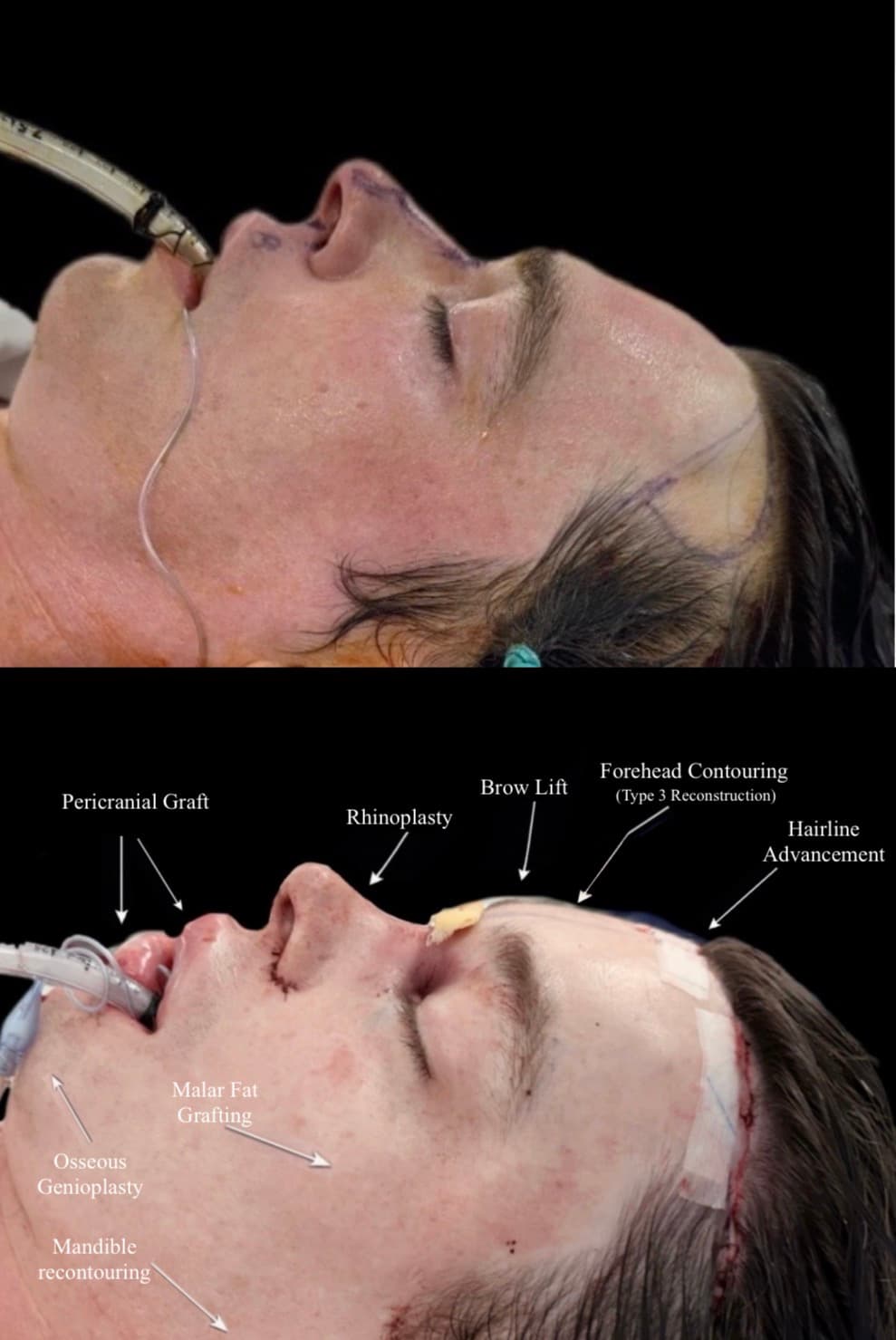
The image above shows an intraoperative example from facial feminization surgery performed by Dr. Kriya Gishen, illustrating several of the facial structures that may be addressed during FFS.
Upper Face Feminization
Forehead Recontouring and Brow Lift
The forehead is one of the most commonly addressed features in facial feminization, accounting for approximately 35% of all FFS procedures. Masculine foreheads typically exhibit prominent brow bossing and a flatter frontal bone contour. Forehead recontouring involves anterior frontal sinus wall setback to reduce brow prominence and create a smoother, more convex forehead profile. This procedure is often combined with an open brow lift to elevate the eyebrows to a more feminine position and increase the nasofrontal angle.
Hairline Advancement
Hairline lowering through scalp advancement addresses the typically higher masculine hairline, creating a more rounded and feminine hairline contour. This procedure can dramatically soften the upper third of the face.
Midface Feminization
Feminizing Rhinoplasty
Rhinoplasty for facial feminization focuses on creating a smaller, more refined nasal profile with elevated tip projection and increased nasolabial angles. Techniques may include dorsal hump reduction, tip refinement, and narrowing of the nasal base to achieve feminine nasal proportions.
Cheek Augmentation
Cheek implants or fat grafting can enhance midface fullness and create the higher, more prominent cheekbones characteristic of feminine facial structure.
Lower Face Feminization
Jaw Contouring and Mandible Reduction
Masculine jaws tend to be wider and more angular, and mandibular angle reduction and tapering create a softer, more oval facial shape by reducing the squareness of the lower face.
Feminizing Genioplasty
Chin reshaping addresses the typically larger, more prominent masculine chin. Osseous genioplasty can reduce chin height, narrow chin width, and adjust projection to create more delicate and feminine chin proportions.
Additional Procedures
• Lip lift and lip augmentation, to create fuller and more feminine lips.
• Blepharoplasty (eyelid surgery), to achieve more open, feminine-appearing eyes.
Virtual Surgical Planning and 3D Imaging
Modern FFS increasingly utilizes virtual surgical planning with custom cutting guides and patient-specific implants. This technology has been shown to improve surgical efficiency, safety, and accuracy. Furthermore, preoperative CT imaging allows for morphologic typing of facial features and precise surgical planning, reducing operative time and minimizing risks such nerve injury or delayed tissue healing.
Patient Outcomes and Satisfaction
Research demonstrates that FFS produces excellent outcomes with high patient satisfaction rates. Studies show significant improvements in multiple quality-of-life domains, including:
• Reduced anxiety, depression, and social isolation
• Improved global mental health and positive mood
• Enhanced satisfaction with appearance and social relationships
• Decreased gender dysphoria and misgendering in social settings
Prospective studies have shown median satisfaction scores exceeding 80 out of 100, with improvements evident at one month and remaining stable at six months or longer postoperatively. Patients consistently report that FFS helps them feel more comfortable in their affirmed gender and improves their ability to integrate into everyday society.
Safety and Complications
FFS has an excellent safety profile when performed by experienced craniofacial surgeons. Complication rates are low, with systematic reviews reporting minimal adverse events. The most common concerns include temporary swelling, bruising, and numbness, which typically resolve during the recovery period. Serious complications such as nerve injury or infection are rare when proper surgical technique and anatomical knowledge are applied.
Comprehensive vs. Staged Approach
FFS can be performed as a comprehensive single-stage procedure or as staged surgeries depending on patient preference, medical considerations, and the extent of feminization desired. Many patients undergo multiple procedures simultaneously, with studies reporting an average of 9 procedures per patient. Both approaches have been shown to be safe and effective.
Who Is a Candidate for FFS?
Ideal candidates for FFS include:
• Transgender women seeking facial features that align with their gender identity
• Individuals with gender dysphoria who have completed appropriate psychological evaluation
• Patients who have realistic expectations about surgical outcomes
• Those in good overall health who can safely undergo surgery
• Individuals who have been living in their affirmed gender role
• Many patients choose to undergo FFS before other gender-affirming procedures, as facial appearance plays a crucial role in social interactions and gender presentation.
The Consultation Process
During your FFS consultation, we will:
• Discuss your aesthetic goals and desired outcomes
• Conduct a comprehensive facial analysis to identify masculine features
• Review your medical history and current medications
• Order preoperative imaging (CT scans, 3D photography)
• Create a customized surgical plan tailored to your unique anatomy
• Explain the surgical techniques, recovery process, and expected results
Recovery and Results
Recovery from FFS varies depending on the extent of procedures performed. Most patients can expect:
• Initial swelling and bruising that peaks at 48–72 hours
• Return to light activities within 2–3 weeks
• Visible improvement in facial contours within the first month
• Continued refinement of results over 6–12 months as swelling fully resolves
• The results of FFS are long-lasting and can provide profound psychological and social benefits.
Insurance Coverage for FFS
Insurance coverage for gender-affirming FFS has expanded in recent years as medical evidence demonstrates its effectiveness in treating gender dysphoria. Our practice accepts a wide variety of plans and can assist with insurance verification and documentation to support coverage approval.
Why Choose an Experienced FFS Surgeon
FFS requires specialized training in craniomaxillofacial surgery, a deep understanding of gender-specific facial anatomy, and artistic skill to create natural, feminine results. When selecting a surgeon for your facial feminization journey, look for:
• Board certification in plastic surgery or oral and maxillofacial surgery
• Specific training and experience in facial feminization techniques
• A portfolio of before-and-after photos demonstrating consistent results
• Use of advanced technologies like virtual surgical planning
• A compassionate, affirming approach to transgender care
Take the Next Step
If you're considering FFS, we invite you to schedule a consultation to discuss how these procedures can help you achieve your aesthetic goals and improve your quality of life. Our practice is committed to providing expert, compassionate care for gender-diverse patients who may benefit from FFS.
To schedule a consultation or learn more about facial feminization surgery, please contact our office:
Call/Text: +1 (310) 890-7262
Email: care@drkriya.com