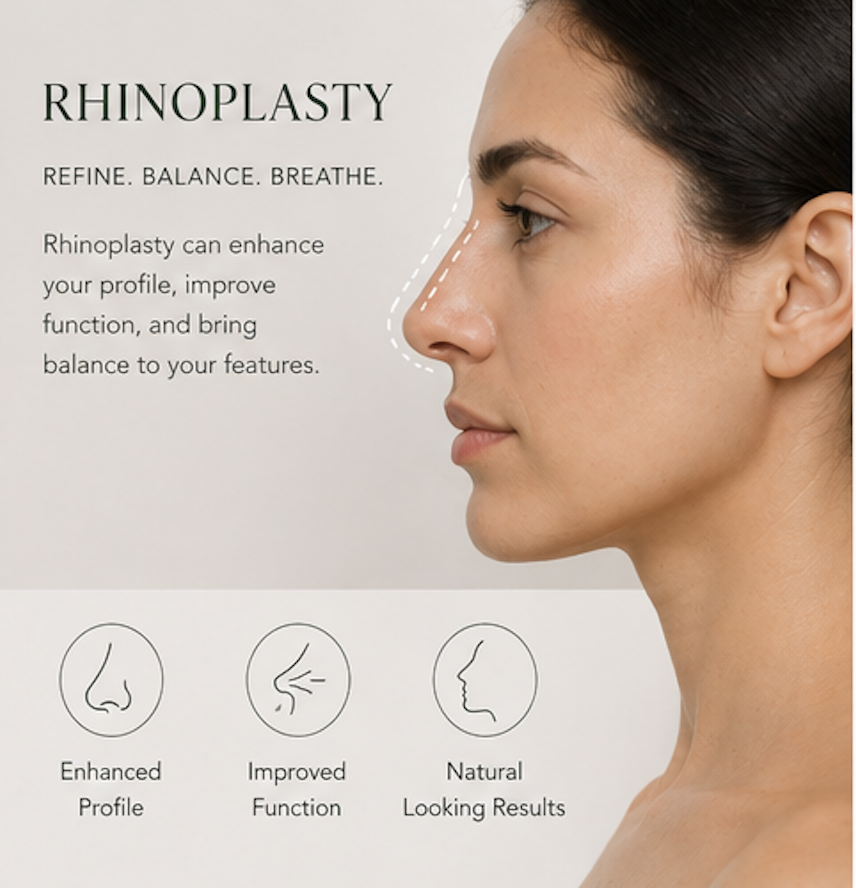
Rhinoplasty is one of the most commonly performed facial plastic surgery procedures worldwide, consistently ranking among the top five aesthetic surgeries. Whether you're seeking to improve the appearance of your nose, correct breathing problems, or both, understanding what to expect can help you feel confident about your decision.
Why Patients Choose Rhinoplasty
Patients seek rhinoplasty for various reasons, including aesthetic concerns (size, shape, symmetry, or proportion of the nose), functional issues (breathing difficulties due to structural problems), trauma (correcting injuries that have altered nasal appearance or function), and congenital issues (addressing birth defects affecting the nose).
Many patients have both aesthetic and functional motivations. The good news is that both can often be addressed in a single surgery.
Understanding Nasal Anatomy
Your nose is composed of bone (the upper third), cartilage (the middle and lower thirds), and soft tissue (skin, muscle, and lining). Rhinoplasty can modify any of these structures to achieve your goals.
Key areas that can be addressed include the dorsum (bridge of the nose), which can be reduced, augmented, or straightened; the tip, which can be refined, rotated, or projected; the nostrils, which can be narrowed or reshaped; the septum, which can be straightened to improve breathing; and overall size and proportion relative to other facial features.
The Consultation Process
Your consultation is crucial for achieving satisfying results. During this visit, your surgeon will examine your nose externally and internally, discuss your goals and concerns, evaluate your facial proportions, review your medical history, explain what's realistically achievable, and discuss surgical approaches and techniques.
Be prepared to clearly articulate what bothers you about your nose and what you hope to achieve. Bringing reference photos can help communicate your aesthetic preferences, though your surgeon will advise on what's realistic for your anatomy.
Surgical Approaches
Rhinoplasty can be performed using two main approaches:
Open Rhinoplasty: A small incision is made across the columella (the tissue between your nostrils), allowing the surgeon to lift the skin and directly visualize nasal structures. This approach provides excellent access for complex modifications.
Closed Rhinoplasty: All incisions are made inside the nose, leaving no visible external scars. This approach works well for less complex modifications and may have slightly faster recovery.
Your surgeon will recommend the approach best suited to your goals and anatomy.
What Happens During Surgery
Rhinoplasty is typically performed under general anesthesia and takes 1.5 to 3 hours depending on complexity. During surgery, your surgeon may remove or reshape bone and cartilage, add cartilage grafts for support or augmentation, straighten the septum if needed, and refine the tip and nostrils.
Recovery Timeline
Recovery from rhinoplasty follows a predictable course:
Week 1: Splint on the nose, swelling and bruising around the eyes, breathing through the mouth due to internal swelling, rest and head elevation important
Weeks 2-3: Splint removed, bruising fades, major swelling decreases, return to light activities and work (for most patients)
Months 1-3: Continued gradual improvement, most social swelling resolved, return to exercise and normal activities
Months 6-12: Final refinement as all swelling resolves
Research shows that rhinoplasty patients are able to resume most routine activities within about 4 days after surgery, though full recovery takes longer.
Setting Realistic Expectations
Rhinoplasty can significantly improve your nose's appearance and function, but it's important to have realistic expectations. Your results will be influenced by your starting anatomy, skin thickness, healing characteristics, and the limitations of what surgery can achieve.
The goal is a nose that looks natural, fits your face, and functions well, not a "perfect" nose or someone else's nose. Studies show that patients who feel well-informed about their surgery report higher satisfaction and faster recovery.
Choosing Your Surgeon
Selecting the right surgeon is crucial for rhinoplasty success. Research shows that the most important factors patients consider when choosing a plastic surgeon are the surgeon's experience with the desired procedure, board certification, and years in practice.
Look for a surgeon who is board-certified in plastic surgery or facial plastic surgery, has extensive experience with rhinoplasty specifically, can show you before and after photos of similar cases, takes time to understand your goals, and explains what's realistically achievable.
Functional Considerations
If you have breathing difficulties, these can often be addressed during rhinoplasty. Septoplasty (straightening the septum) and turbinate reduction can improve airflow while aesthetic changes are made. Be sure to discuss any functional concerns during your consultation.
The Bottom Line
Rhinoplasty is a highly individualized procedure that can significantly improve both the appearance and function of your nose. Success depends on clear communication with your surgeon, realistic expectations, and choosing an experienced specialist who understands both the art and science of nasal surgery. With proper planning and care, rhinoplasty can enhance your facial harmony and boost your confidence.
Schedule a Consultation
Ready to take the next step in your journey?
To learn more and explore how insurance may help cover your procedure, reach out to our team:
Call or Text: +1 (310) 890-7262
Email: care@drkriya.com
Our team is here to support you every step of the way, from navigating insurance approval to guiding you through recovery with confidence and care.
