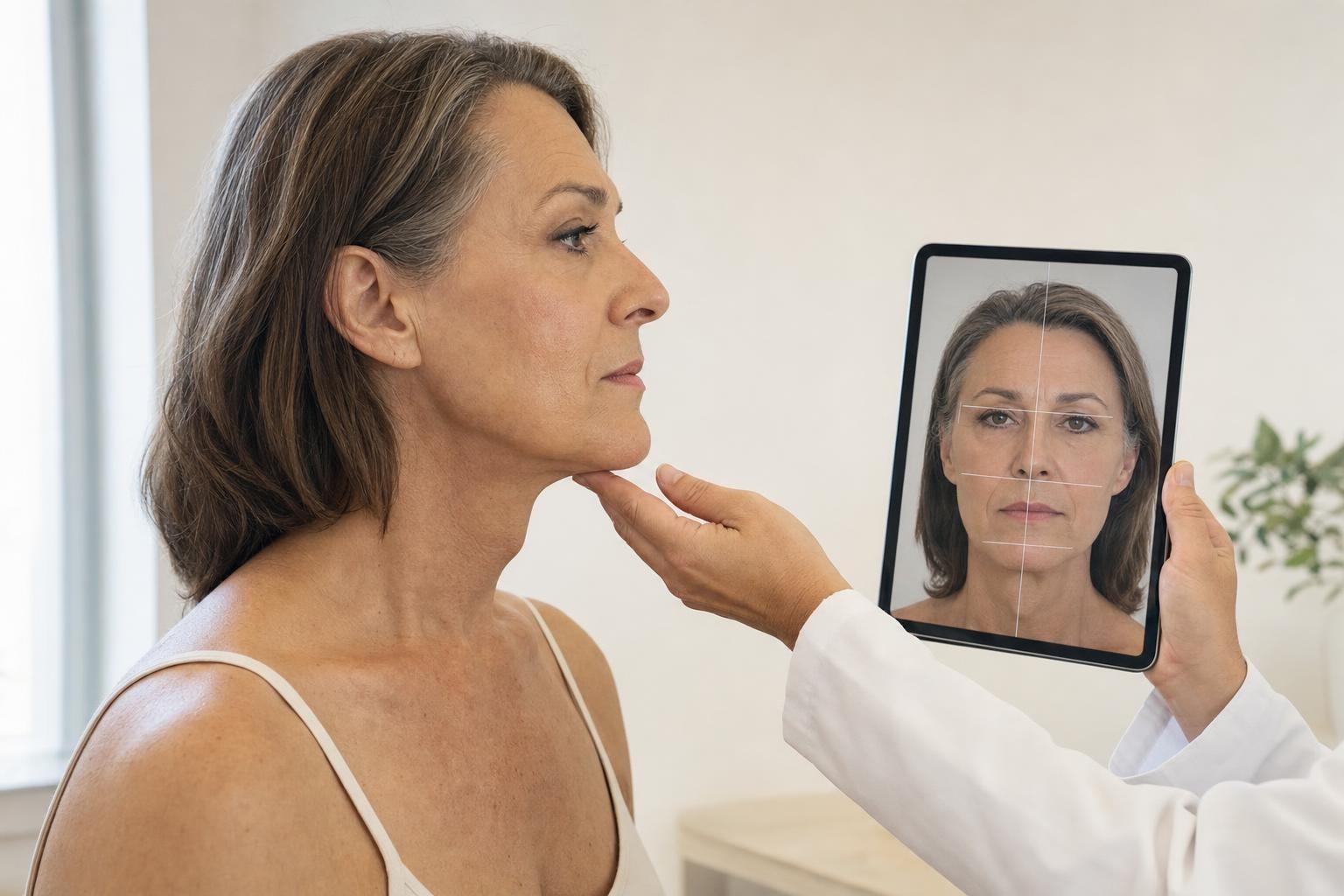
Many of Dr. Kriya's facial feminization surgery (FFS) patients live outside Southern California, and patients travel from across the country to see her. Traveling for this kind of care is common: in a national insurance-claims study of 1,735 people who had gender-affirming surgery, 36% traveled out of state (Johnstone et al., 2023). It does add a layer of planning, because you are organizing a trip, a recovery and a return journey at the same time.
This checklist covers the five things to settle before you book: how your consultation and planning will work from a distance, where you'll stay, who will be with you, which follow-up visits you need to be here for, and when it is safe to travel home. Your own plan comes from Dr. Kriya's care team, so each section ends with the questions to ask them.
Start with the care team, not the flight search
Tell the care team you are traveling the first time you get in touch. They coordinate your scheduling, pre-operative requirements and insurance authorization, and they help you plan your consultation, your surgery date and your time near the Beverly Hills office around one another. Booking flights or lodging before those dates are confirmed is the most common way travel plans go wrong.
Two parts of planning are worth asking about early. Dr. Kriya plans every FFS procedure on a CT scan of your face, using virtual surgical planning, so ask when and where your scan should be done. And if you plan to use insurance, share your insurance details at the start: the practice's coordinators verify benefits and request prior authorization for patients across the country, and that process has its own timeline. The FFS insurance checklist explains each step.
The consultation guide lists what to bring and what to ask at your first visit.
Your travel timeline at a glance
| Stage | What to arrange | Ask the care team |
|---|---|---|
| First contact | Say that you are traveling. Share your insurance details if you plan to use insurance. | How will my consultation and CT scan be arranged? |
| Once surgery is scheduled | Book lodging and a flexible or changeable return ticket. Confirm who is coming with you. | Which date should I arrive, and how long should I plan to stay? |
| Before you leave home | Complete pre-operative requirements. Fill prescriptions if advised. Pack for recovery. | What do I need to finish at home before I travel? |
| Surgery week | Stay overnight in the hospital if your plan includes it, then rest at your lodging with your caregiver. Attend your first post-operative visit. | Will I stay overnight in the hospital, or go home the same day? Who do I call after hours? |
| Before you go home | Attend your early follow-up visits. Get clearance to travel. | Am I cleared to fly or drive, and how will later follow-up work? |
Where to stay
Your first night after surgery may be in the hospital. Depending on the length and location of your procedure, you may qualify for a one-night hospital stay so the team can make sure you are recovering well and your pain is under control. Ask the care team whether you will stay the night in the hospital or be discharged the same day, and book your lodging dates to match.
Dr. Kriya's office is at 9730 Wilshire Blvd., Suite 200, in Beverly Hills, and you'll want your lodging to be a short drive away for the first visits after surgery. Recovery puts different demands on a room than a holiday does. When you compare options, look for:
- A short, simple trip to the office, since you will not be driving yourself
- A refrigerator, and ideally a kitchenette, for cold compresses, soft foods and plenty of fluids
- Enough pillows, or a recliner, to keep your head elevated while you sleep
- An elevator or ground-floor room, and a quiet setting where you can rest during the day
- Space and a proper bed for your caregiver
- A flexible booking, in case your surgeon asks you to stay a few days longer
Plan your lodging dates around your surgical plan, not around a fixed number of nights. How long you stay depends on which procedures you're having, and the care team will help you work it out.
Who will be with you
Plan to have another adult with you. In most cases, traveling alone for FFS is not advised: you need someone to help you recover from surgery and anesthesia, and you cannot drive yourself while you are taking prescription-strength pain medication. The American Society of Anesthesiologists advises having someone stay with you for at least the first 24 hours. In the first days after FFS you will be swollen and tired, and bending, lifting and straining are off limits. A caregiver typically helps with:
- Getting you to your lodging after surgery and to your follow-up visits
- Keeping track of medications and cold compresses
- Preparing soft foods and making sure you drink enough
- Watching for the warning signs your surgical team describes, and calling if something looks wrong
- Everyday tasks such as shopping, laundry and carrying bags
If nobody can travel with you, tell the care team before you schedule surgery, not when you arrive, so you can plan around it together.
Follow-up visits before you go home
Dr. Kriya schedules follow-up appointments to keep your recovery on track, and the early ones need to happen in person. Most patients who travel stay locally for their first post-operative visit, and sutures are typically removed in the second or third week. The FFS recovery timeline shows what the first weeks usually look like, and the post-operative care guide covers daily care.
Before you leave, make sure you know how the rest of your follow-up will work: which visits can be handled remotely, how to send photos, and who to contact at home if you have a concern. It also helps to tell your own doctor at home about your surgery before you travel, so someone local knows your history.
Getting cleared to travel home
Do not fix your return date until your surgeon has confirmed when you can travel. Two things drive that decision.
The first is blood clots. Recent surgery is a recognized risk factor for blood clots in the legs and lungs, and so is long-distance travel, most often defined as a trip of more than four hours. The CDC Yellow Book also lists estrogen use and age over 40 among the risk factors, so tell your surgeon about any hormone therapy. Don't stop or change it on your own: current evidence does not support routinely stopping hormone therapy before surgery (Boskey et al., 2019), and the decision belongs with your surgeon and your prescribing clinician. That is one reason surgeons ask patients to wait before a long flight or drive, and why gentle walking is encouraged from the first day.
The second is your healing. Swelling, any drains or dressings, and how you are managing pain all affect whether a day of travel is sensible. If your plan includes forehead or nose surgery, ask specifically about flying. There is no published standard for air travel after facial surgery, so your surgeon's instruction is the one that counts.
When you are cleared, a few habits make the trip easier:
- Walk the aisle regularly, do calf exercises in your seat and choose an aisle seat, as the CDC suggests for travelers at higher risk of clots. Ask your surgeon whether compression stockings make sense for you
- Ask for wheelchair or cart assistance at the airport, and let your caregiver handle the bags
- Keep medications, your surgeon's contact details and any written instructions in your carry-on
- Sleep with your head elevated on the journey, and keep drinking water
What to pack for recovery
- Button-front or zip-front tops, so nothing has to go over your head
- A travel pillow or wedge for sleeping upright
- Lip balm, gentle cleanser and any skincare your surgeon approves
- A wide-brimmed hat, a soft scarf and sunglasses for the trip home, if your surgeon says they are fine to wear
- Entertainment that doesn't need much concentration
- Your ID, insurance card, medication list and the practice's phone number
Budgeting for travel
Travel, lodging and time away from work are personal expenses and are not always part of a surgical estimate, so build them into your budget from the start. Count flights or fuel for two, lodging for your whole stay plus a margin, meals, local transport and your caregiver's time. The FFS cost guide explains what an estimate does include, and the practice works with PatientFi and CareCredit for financing.
Questions to ask before you book
Every surgical plan is different, so confirm the details with Dr. Kriya's care team:
- How will my consultation be arranged, and do I need to come in person before surgery?
- When and where should I have my CT scan?
- What pre-operative requirements should I complete at home?
- How many days before surgery should I arrive?
- Will I stay overnight in the hospital after surgery, or be discharged the same day?
- How long should I plan to stay after surgery, given my procedures?
- Do I need a caregiver with me, and for how long?
- Which follow-up visits must be in person, and which can be remote?
- When will I be cleared to fly, or to take a long drive?
- Who do I contact once I'm home if I have a concern?
Can I have FFS with Dr. Kriya if I live outside California?
Yes. Patients travel from across the country for facial feminization surgery with Dr. Kriya. Tell the care team you are traveling when you reach out, and they will help you plan around your surgical plan.
How long will I need to stay in Beverly Hills?
It depends on the procedures in your plan. The care team helps you plan how long to stay near the office, so ask before you book lodging or a return ticket.
Will insurance work if I'm from another state?
It can. The practice's insurance coordinators verify benefits and request prior authorization for patients across the country. Coverage depends on your plan; see the FFS insurance checklist.
Can I travel alone?
In most cases, no. You need someone with you to help you recover from surgery and anesthesia, and you cannot drive yourself while taking prescription-strength pain medication. Plan on having an adult with you for the trip home from surgery and the first days of recovery. If that is difficult, talk to the care team before you schedule.
This article is general planning information. Your surgeon's instructions on arrival, length of stay and clearance to travel take priority.
Sources
- Johnstone T, et al. Travel distance and national access to gender-affirming surgery. Surgery. 2023;174(6):1376–1383. doi.org/10.1016/j.surg.2023.09.008
- American Society of Anesthesiologists. Outpatient Surgery (patient guidance). madeforthismoment.asahq.org/preparing-for-surgery/procedures/outpatient-surgery/
- Reyes NL, Abe K. Deep Vein Thrombosis and Pulmonary Embolism. CDC Yellow Book, 2026 edition. Centers for Disease Control and Prevention. www.cdc.gov/yellow-book/hcp/travel-air-sea/deep-vein-thrombosis-and-pulmonary-embolism.html
- Boskey ER, Taghinia AH, Ganor O. Association of Surgical Risk With Exogenous Hormone Use in Transgender Patients: A Systematic Review. JAMA Surg. 2019;154(2):159–169. doi.org/10.1001/jamasurg.2018.4598